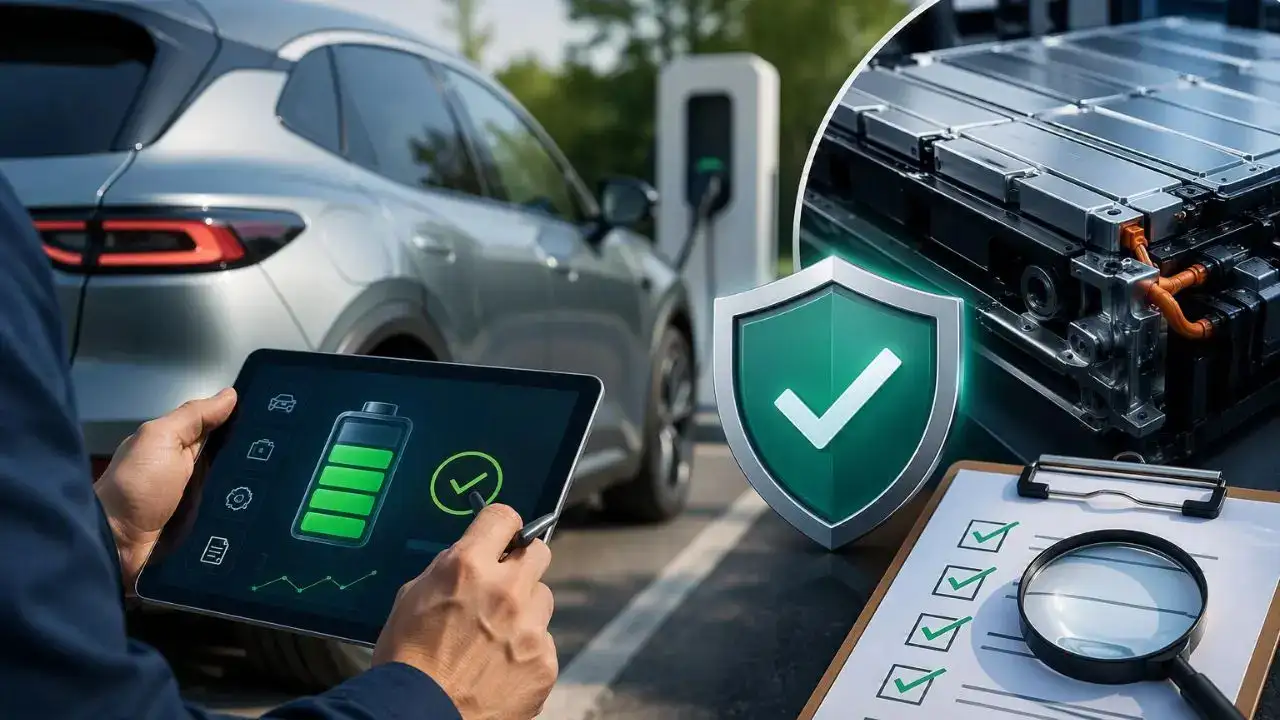
Electric cars have gone from a novelty to a genuinely practical choice for a lot of Indian buyers now. But an EV purchase is different from a petrol car purchase in some important ways, and a lot of first-time buyers don’t realize this until after they’ve signed the papers.
Here are the real things to check before buying an EV — not the marketing brochure version, the practical one.
Check the Real-World Range, Not the Claimed Range
Every EV manufacturer advertises a range figure tested under ideal lab conditions. Real-world range is usually 15-25% lower, especially with AC running or in stop-start city traffic.
Quick answer: Always subtract at least 20% from the manufacturer’s claimed range to estimate realistic daily driving range, particularly if you’ll use air conditioning or drive frequently in city traffic.
If your daily commute is 40 km round trip, a car claiming 300 km range should comfortably give you 220-240 km in actual conditions — still plenty, but know the real number before you buy.
Look at Charging Infrastructure Near You
This is one of the most important things to check before buying an EV, and it’s the one people research the least.
- Do you have a dedicated parking spot where you can install a home charger?
- Is there a public fast-charging network along your regular routes?
- How far is the nearest charging station from your home or office?
I’ve talked to EV owners in smaller towns who love their car but wish they’d mapped out charging options before buying, not after.
Understand the Battery Warranty in Detail
Quick answer: Most EV batteries in India come with an 8-year or 160,000 km warranty, whichever comes first, but always confirm whether it covers full replacement or only a percentage of capacity degradation.
Read the fine print carefully. Some warranties only kick in if battery capacity drops below a certain threshold, like 70%. Others cover full replacement regardless. This difference matters a lot if you plan to keep the car long-term.
Factor in Home Charger Installation Costs
Buyers often forget this line item entirely. A home charging setup — including the wall box and electrician work — can cost anywhere from ₹15,000 to ₹60,000 depending on your existing electrical setup and the charger’s power rating.
- Check if your building allows charger installation
- Confirm your electrical panel can handle the additional load
- Ask the dealer if installation is bundled with purchase
Compare Running Costs vs a Petrol Equivalent
This is where EVs genuinely shine. Charging costs per kilometer are typically a fraction of petrol costs, sometimes 70-80% cheaper depending on your electricity tariff.
Do the math for your own usage though — if you drive 50 km a day, work out your monthly electricity cost versus your current petrol spend. The savings are real, but seeing your own numbers makes the decision feel less abstract.
Test Drive in Realistic Conditions
Don’t just do a smooth showroom loop test drive. Ask to take it on a slightly bumpy road, try it in stop-start traffic, and if possible, use the AC during the test.
EVs deliver power instantly, and that’s fun — but also check regenerative braking feel, since it’s quite different from a normal petrol car’s brake feel and takes some adjustment.
Check Service Network and Spare Parts Availability
Quick answer: Before buying, confirm there’s an authorized service center within a reasonable distance, since EV-specific repairs often can’t be handled at regular garages.
EV mechanics and parts are still less widespread than for petrol or diesel vehicles in many Indian cities. A car you love is only useful if you can actually get it serviced without a huge hassle.
[link to related guide about EV vs hybrid comparison here]
Look Into Government Subsidies and Tax Benefits
Depending on your state, EV buyers can access purchase subsidies, road tax exemptions, or lower GST rates. These vary a lot by state, so check current numbers before finalizing your budget — they can shift the total cost meaningfully.
FAQs About Buying an Electric Vehicle
How much range do I actually need for daily use? Most Indian city commuters travel under 50 km daily, so even an EV with 200 km real-world range comfortably covers a full week between charges.
Is home charging necessary before buying an EV? It’s not mandatory but strongly recommended — relying only on public charging stations can be inconvenient for daily use.
How long does an EV battery typically last? Most EV batteries are designed to retain 70-80% capacity even after 8 years or 160,000 km of use, though this varies by manufacturer and usage patterns.
Are EVs cheaper to maintain than petrol cars? Generally yes, since EVs have fewer moving parts, no oil changes, and lower brake wear due to regenerative braking.
Can I install a fast charger at home? Fast chargers typically need a higher power connection than standard home wiring provides, so most home setups use slower AC chargers instead.
Do EVs lose value faster than petrol cars? Resale value data is still developing in India, but battery health and warranty transferability are the biggest factors buyers consider when purchasing used EVs.
Conclusion
An EV can be a genuinely smart purchase in 2026, but only if you go in with realistic expectations about range, charging access, and battery warranty terms. Do the homework on your own daily driving pattern before falling for the showroom pitch. If the numbers work for your routine, an EV can save you real money over the next few years. Map out your nearest charging points today — it’ll tell you more than any brochure will.
[Suggested image alt text: “electric car charging at home wall charger”] [Suggested image alt text: “EV dashboard showing battery range display”]